Cacao ceremonies have spread from Central America to yoga studios, retreats and living rooms worldwide. If you are curious but unsure what to expect, this guide is for you.
What is ceremonial cacao?
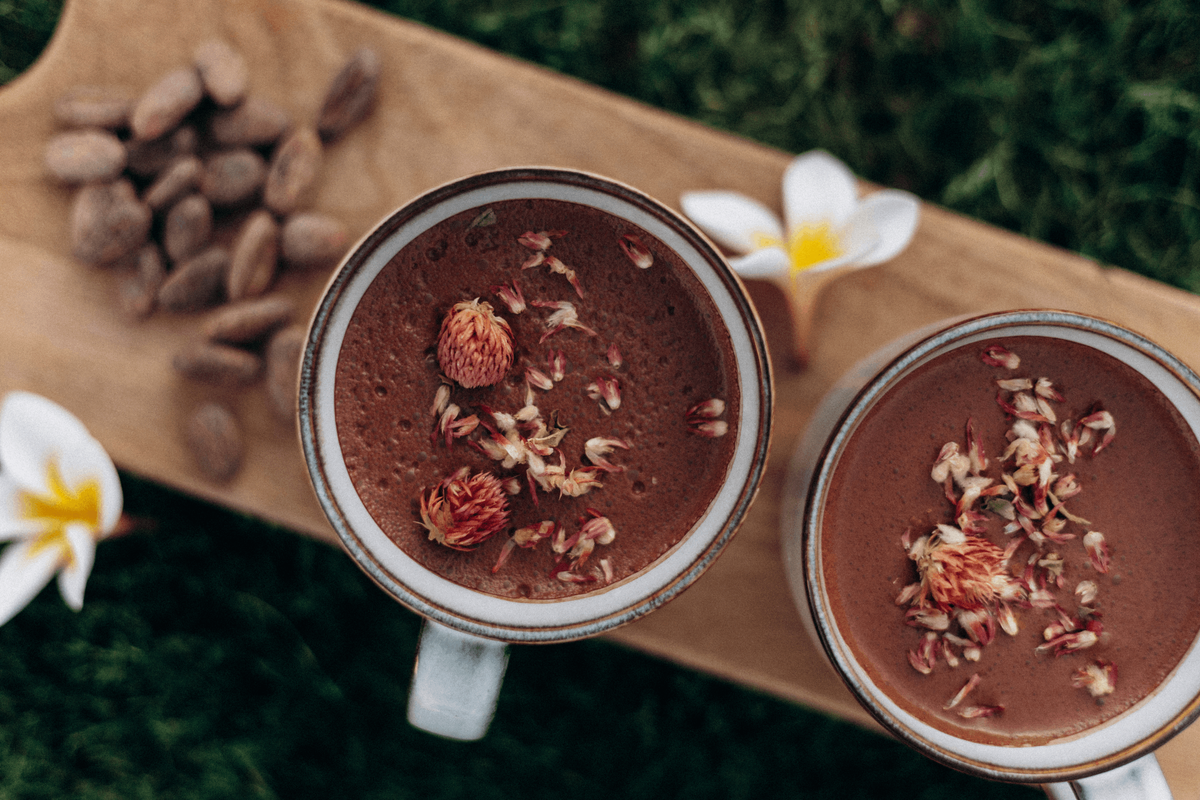
Ceremonial cacao is minimally processed cacao paste, made from whole beans. Unlike chocolate, it keeps its natural fat and has little or no sugar. It is drunk warm, often with spices.
How does it feel?
Cacao is gentle. It is not a psychedelic. Most people describe a warm, open-hearted feeling and steady focus. It contains theobromine, a mild stimulant, and flavanols that research links with better blood flow and mood (Sokolov et al., Neuroscience & Biobehavioral Reviews, 2013).
What happens in a ceremony?
- Arriving and intention. The facilitator opens the space and invites you to set a personal intention.
- Drinking the cacao. Slowly and mindfully, often with a blessing or moment of gratitude.
- The journey. This might include breathwork, meditation, music, dance, journaling or sharing.
- Closing. Time to integrate and return, often with a sharing circle.
Who is it for?
Anyone looking for connection, a gentle heart-opening practice, or a meaningful alternative to alcohol-based gatherings.
Who should be careful?
Speak to your doctor first if you take antidepressants (especially MAOIs or SSRIs), have heart conditions or high blood pressure, are pregnant, or are sensitive to caffeine. A responsible facilitator will ask about this before the ceremony.
How to prepare
- Eat lightly beforehand.
- Drink plenty of water.
- Avoid coffee on the day.
- Come with an open mind and a simple intention.
Want to hold your own ceremonies? The self-paced Cacao Ceremony Facilitator Training teaches ceremony design, space holding and how to organise events, fully online.