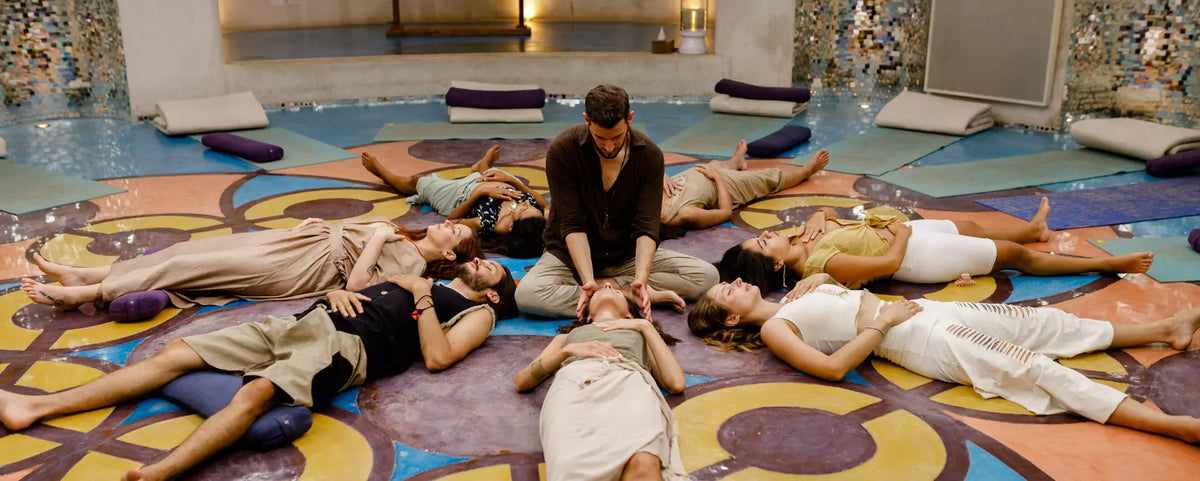

Breathwork refers to the increasingly popular practices that use conscious and focused breathing to enter different states of awareness. It can be done as a simple practice to gain relaxation, but also with the intention of diving deeper into our body and mind.
/wp:paragraph wp:paragraphIt can lead to the arising of different physical and emotional sensations that can sometimes be experienced quite intensely. Often it is in these intense experiences where the healing potential of breathwork lies, however, it has also brought up the big question of whether breathwork is truly safe to practice.
/wp:paragraph wp:paragraphIn this article we will dive into the effects of breathwork and safety issues concerned with them, and expand on how to do breathwork safely.
Effects of breathwork
/wp:heading wp:paragraphBreathwork brings up a wide range of thoughts, feelings and sensations, ranging from bursts of emotions such as sadness or joy to shaking and intense physical pleasure.
/wp:paragraph wp:paragraphPhysical Manifestations
/wp:paragraph wp:paragraphPhysical effects can show up in many ways, such as
/wp:paragraph wp:list- Strong physical sensations; we also call it physiological drama.
- Tetany, tension and cramping that focuses on the hands, arms, feet, legs and mouth.
- Tetany can also be the physical manifestation of fear.
- Anaesthesia, feeling sleepy during a session.
- Emotional anaesthesia: Each time the person is about to have an intense emotional experience they fall asleep. It is usually a self-defence mechanism that we learnt as a child.
- When the person is tired or has a tendency towards hyperactivity which represses emotion, she or he might have anaesthesia as well.
Other physical manifestations are:
/wp:paragraph wp:list- Shaking
- Tensions
- Pins and needles
- Paralysis
- Feeling hot and cold
- Sweating
- Dizziness
- Heaviness in the chest, sometimes this is a birth memory being re-experienced before release.
- Difficulty breathing
- Blocked nose
- Intense pleasure
- All body orgasms
Are these physical effects safe?
/wp:paragraph wp:paragraphIn fact, these physical sensations can be the manifestations of suppressed tensions, emotions or memories surfacing. This is due to the energy generated during the session and the different level of consciousness accessed.
/wp:paragraph wp:paragraphHowever, given the fact that these physical sensations brought up can sometimes be quite intense, it brings to question whether it is in fact safe to experience. A main argument against breathwork among its opponents is that these effects are caused by hyperventilation, which can be dangerous.
/wp:paragraph wp:paragraphSometimes during breath work we might indeed do some hyperventilation, depending on the type of breathwork and the breather. However, it is always done in a voluntary and controlled way.
/wp:paragraph wp:paragraphOur breathwork methods are not techniques of hyperventilation. However, sometimes, the breathers extend or push the exhale and might have some symptoms of hyperventilation, such as:
/wp:paragraph wp:list- hand spasms
- feelings of lightheaded
- tingling
- confusion or difficulties in concentrating
- dizziness or light headache
However, breathwork does not lead to “hyperventilation syndrome”, which is defined in the medical literature as rapid deep breathing, leading to low CO2 levels in the patient’s blood within 10 minutes of intense hyperventilation. The strong physical experiences that may emerge are thus safe and only temporary. And if one is determined enough to keep breathing through the struggles in the beginning, breathwork offers many benefits.
Emotional & Psychological Manifestations
/wp:paragraph wp:paragraphBreathwork can also cause an array of psychological sensations, from deep emotions and memories surfacing to mystical experiences of divine connection and big insights.
/wp:paragraph wp:paragraphEmotions and memories may surface during breathwork, and some sessions can be very emotional, others more physical, and often people experience both simultaneously.
/wp:paragraph wp:paragraphIt is possible to have all kinds of pleasant and unpleasant emotions and memories from different parts of our lives during a breathing session. By facing these emotions and memories people can process them deeper, and sometimes even experience big releases during the session, for example by crying. People also may experience extremely positive feelings of intense love, gratitude and oneness, which also can lead to deep emotional expressions such as crying.
Is this experience of powerful emotions and traumatic memories safe?
/wp:paragraph wp:paragraphSince people may also experience memories and emotions connected to traumatic experiences, the question of safety comes up as one wonders whether this deep reexperiencing of emotions and memories is safe and does not lead to a re-traumatization.
/wp:paragraph wp:paragraphTo answer this, the Irish psychiatrist Ivor Browne and his team suggested that when experiencing the surfacing of traumatic childhood memories, we are not dealing with an exact replay or repetition of the original traumatic situation, but with the first full experience of the appropriate emotional and physical reaction to it. This means that, at the time when they happened they weren’t fully consciously experienced, processed, and integrated.
/wp:paragraph wp:paragraphIn addition, the person confronts the memory as an adult rather than the helpless child they were in the original situation. This allows to experience all the emotions and physical sensations of the original traumatic situation from the perspective of the child, but at the same time analyze and evaluate the memory in the therapeutic situation from a mature adult perspective. This makes this experience of emotions and memories a beautiful and safe way to process difficult life events and heal from them.
/wp:paragraph wp:paragraphHow to do breathwork safely
/wp:paragraph wp:paragraphDespite our conclusions of the physical and emotional safety of breathwork, if you have any serious illness or condition such as high blood pressure, it is vital to seek medical supervision prior to a session. And there are some contraindications to be considered such as:
/wp:paragraph wp:paragraph– Pregnancy
/wp:paragraph wp:paragraph– Asthma
/wp:paragraph wp:paragraph– Epilepsy
/wp:paragraph wp:paragraph– Detached retina
/wp:paragraph wp:paragraph– Glaucoma
/wp:paragraph wp:paragraph– Uncontrolled high blood pressure
/wp:paragraph wp:paragraph– Cardiovascular Diseases (including prior heart attack)
/wp:paragraph wp:paragraph– Mental disorders (manic disorder, bipolar disorder, schizophrenia, obsessive-compulsive disorder (OCD), paranoia, psychotic episodes, depersonalization, etc.)
/wp:paragraph wp:paragraph– Strokes, TIA´s, seizures or other brain/neurological conditions
/wp:paragraph wp:paragraph– A history of aneurysms in your immediate family
/wp:paragraph wp:paragraph– Use of prescription blood thinners
/wp:paragraph wp:paragraph– Hospitalized for any psychiatric condition or emotional crisis within the past 10 years
/wp:paragraph wp:paragraph– Osteoporosis or physical injuries that are not fully healed
/wp:paragraph wp:paragraph– Acute somatic and viral diseases
/wp:paragraph wp:paragraph– Chronic obstructive pulmonary disease (COPD-II and COPD-III)
/wp:paragraph wp:paragraph– Chronic diseases with symptoms of decompensation or terminal illness
/wp:paragraph wp:paragraph– Individual intolerance of oxygen insufficiency
/wp:paragraph wp:paragraph– Cancer, unless IHT is prescribed by a doctor
For those who want to practice breathwork safely and professionally, completing a trauma-informed breathwork teacher training is essential./wp:paragraph wp:paragraph /wp:paragraph wp:paragraph
Setting, Support and Aftercare
/wp:paragraph wp:paragraphIt is important to practice breathwork in safe environments where nothing around you can harm you, for example, breathwork while driving or operating machinery is a big no!
/wp:paragraph wp:paragraphFurthermore, deep breathwork sessions should be practised in the presence of a facilitator to help you navigate through whatever comes up and to cope with any sort of emotions, negative beliefs and thoughts in each step so you can proceed in the best way.
/wp:paragraph wp:paragraphIt is also important to take the process slow, with adequate time taken for the different parts of the process, to land after the session and process what comes up. And if traumas or deep emotions are awakened, then guidance is also necessary from the facilitator after the session.
/wp:paragraph wp:paragraphThough breathwork can be intense on the body and mind, if contraindications are considered and a qualified facilitator is present, it is a safe practice. The conscious use of our own breath is a beautiful way to unlock the power of our body and help us tap into a vast field of benefits, healing and self-regulatory techniques that lie within us.
/wp:paragraph wp:paragraphThe safety of breathwork depends heavily on the facilitator's training and competence. Accredited breathwork teacher training provides the trauma informed methodology and supervised practice needed to guide sessions responsibly.
/wp:paragraph